
Wellbeing . AI . Humans

Research FOCUS
Where
emotion meets intelligence & technology that cares
Several interconnected research directions exploring the relationship between human emotions, design, AI systems, and wellbeing.
Themes
At its core, the work in the studio explores how technology can better understand and respond to human experience and not just in what it does, but in how it feels and adapts. It brings together computational systems and design to engage with emotion, cognition, and behaviour in more meaningful ways.

Emotion-Centered Design, Creativity and Cognition
This theme explores how emotion can become a central lens in the design of products, systems, and experiences. It asks how design can move beyond usability and function to engage more deeply with feeling, meaning, and human response. It brings together design practice and research to understand how emotional states influence cognition, learning, and creative work. The work includes experimental methods, behavioural inquiry, and design prototyping to study and respond to human experience. The aim is to develop design approaches that are more sensitive to how people think, feel, and create.
Emotion-Centered Design
Creative Cognition
Affective Design
Experimentation
Design Methods
Prototyping

Custom Large Language Models (LLMs) for Human Well-being
This theme focuses on developing and fine-tuning Large Language Models (LLMs) that better understand human context, emotion, and intent. The work explores how language models can move beyond generic outputs to become more nuanced, adaptive, and meaningful in the way they process and respond to human situations. It includes model fine-tuning, alignment strategies, domain adaptation, and evaluation through human-centered methods. The broader aim is to build language-based AI systems that are more context-sensitive, responsible, and grounded in human experience.
LLM Fine-tuning
Creative Cognition
Alignment
Experimentation
Domain Adaptation
Prototyping
.png)
Human-AI Collaborative Creativity
This theme explores how humans and AI systems can work together as creative partners rather than as tools for simple automation. It examines how AI influences ideation, iteration, exploration, and decision-making within creative processes across design and related domains. The work looks at questions of agency, authorship, control, and trust in co-creative settings, while also prototyping and evaluating new forms of human-AI collaboration. The aim is to understand and shape more meaningful, reflective, and productive relationships between human creativity and intelligent systems.
Human-AI Collaboration
Authorship
Co-Creation
Agency
Creative Systems
Trust
Emotion-Aware Intelligent Systems
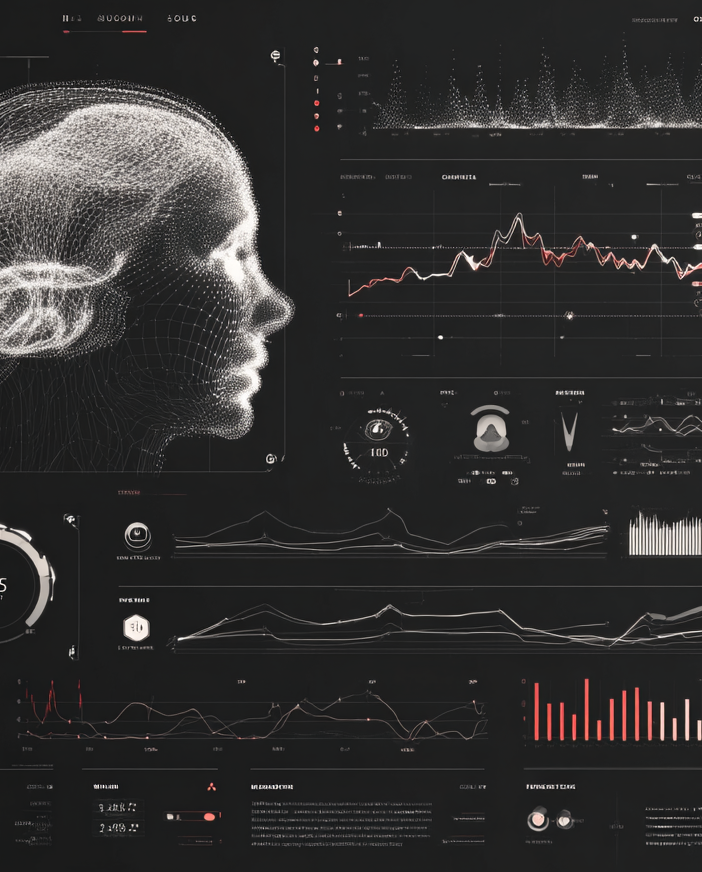
This theme explores how intelligent systems can be designed to sense, interpret, and respond to human emotional states in more meaningful ways. It brings together computational modelling, behavioural data, and multimodal signals to build systems that are more adaptive, context-sensitive, and attuned to human experience. The work examines how emotion can become an active part of system intelligence rather than an afterthought in interaction design. The aim is to develop AI systems that engage with people in ways that are more responsive, supportive, and human-aware.
Emotion-Aware AI
Affective Computing
Adaptive Systems
Multimodal Intelligence
Human-Centered AI
Context-Aware Systems

Data Collection & Dataset Generation for AI and Well-being
This theme focuses on building high-quality datasets for studying the relationship between AI, emotion, behaviour, and well-being. It involves the collection, annotation, and integration of multimodal data such as physiological signals, facial behaviour, interaction logs, self-reports, and other human-centered measures. The work also examines how such datasets can be made rigorous, ethical, and meaningful for training and evaluating intelligent systems. The aim is to create strong empirical foundations for future AI systems designed around human well-being.
Dataset Generation
Physiological Sensing
Multimodal Data
Behavioural Data
Data Annotation
AI for Well-being

AI for Care, Support, and Well-being
This theme explores how AI systems can be designed to support human well-being in ways that are meaningful, responsible, and context-sensitive. It focuses on intelligent tools and support systems that engage with care, emotional support, behavioural change, and everyday human needs without reducing wellbeing to simple automation. The work examines how AI can assist, accompany, and respond in ways that remain sensitive to human dignity, agency, and lived experience. The aim is to develop AI systems that contribute to care and support in more thoughtful and human-centered ways.